Don't Out-code, Out-architect
The nature of software development has undergone a structural shift. When syntax, API orchestration, and boilerplate logic effectively cost zero, the traditional "coder" is no longer the primary value driver.
The developer’s role has moved entirely upstream. We are no longer merely writing lines of code; we are designing the systems that generate them.
The Agentic Paradox
Agents have a single-minded goal: fulfill the prompt as quickly as possible. This efficiency is a double-edged sword. Left to their own devices, agents are masters of micro-optimization but experts at macro-bloat.
Example: You ask an agent to "build a user authentication system." It will quickly spin up a functional system using a popular but bloated library that includes 50+ unnecessary dependencies. It fulfills the prompt perfectly but leaves you with a maintenance nightmare. A human architect sees this, rejects the bloat, and forces a refactor to a lightweight, custom implementation.
If you cannot out-code the agent, you must out-architect it.
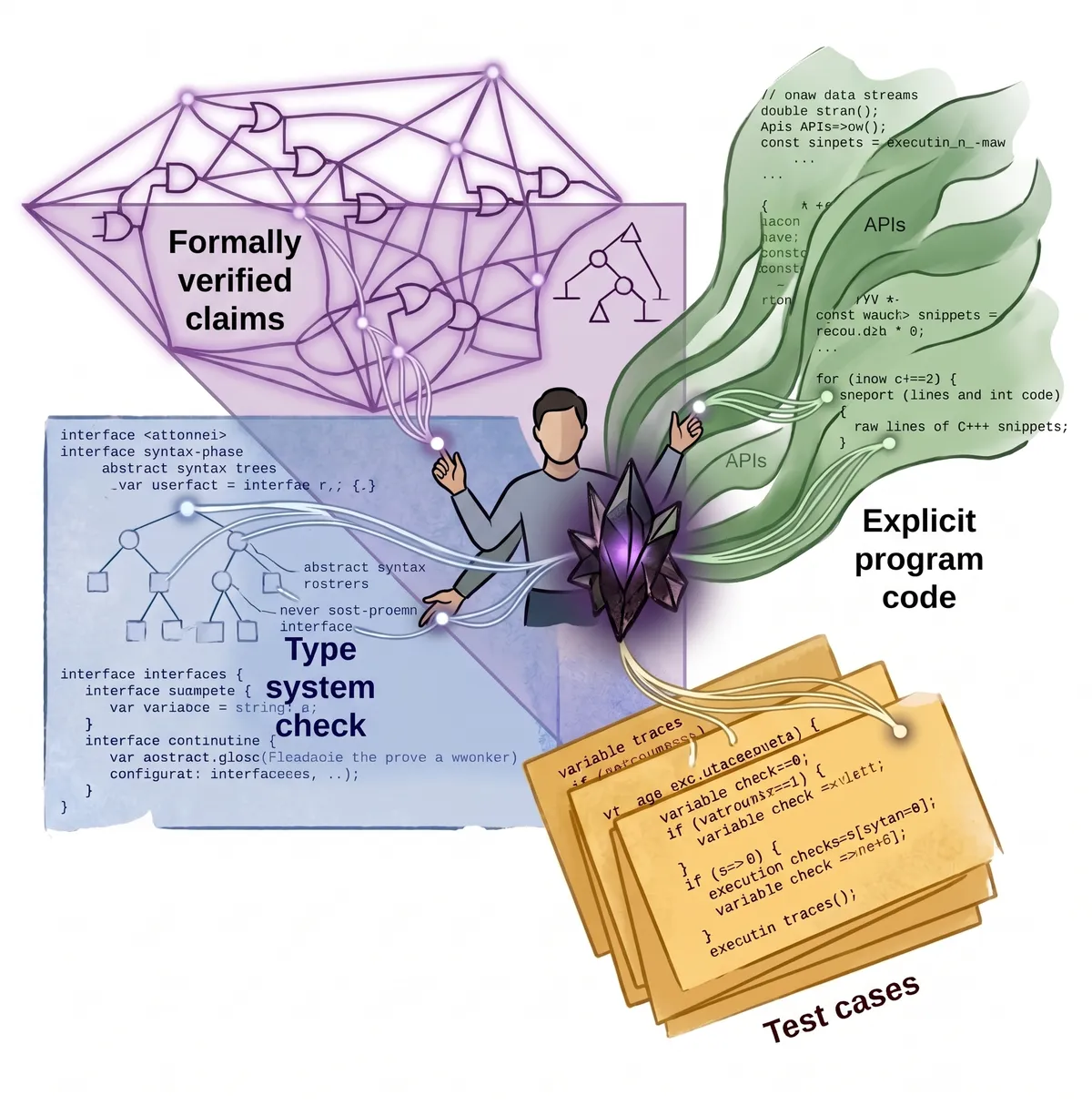
The New Toolkit
Safe programming in the agentic era is about expressing your intention in clear, verifiable ways.
1. Architecture & Oversight
Your job is to act as the editor-in-chief. Recognize when an agent is choosing a convenient abstraction over a scalable one.
- Example: When building a data pipeline, an agent might choose a "one-size-fits-all" ORM. Your value is the adversarial check: asking, "What happens if this API hits 10,000 requests per second?" and forcing a switch to a high-concurrency architecture.
2. Specifications as Source Code
In this world, the spec is the source code. Move from conversational chatter to active, live documentation.
- Example: Don't say "Make an API for profiles." Provide a markdown file defining:
Input: UserID (UUID),Output: JSON,Failure: 404/429. This turns the agent into a precision tool.
3. Defensive Security
Agents don't natively prioritize security. The burden of defense falls on the human.
- Example: An agent might expose your connection string in the frontend. An architect intercepts this by setting up "gates": enforcing environment-variable-only storage and defining a zero-trust policy.
4. Aesthetic Taste
An agent can generate a UI, but it cannot understand human psychology.
- Example: An agent can generate a perfectly aligned dashboard, but it doesn't know that your specific user base finds a certain notification pop-up annoying. The architect provides the why—overriding the "standard" AI design to create something that actually resonates.
The human ability is to manage complexity and define constraints. The machine handles the what. You remain the authority on the should.